

Understanding ABN Car Loans for Businesses
Whether you are a sole trader, a busy tradie, or the director of a growing company, reliable transport is often the lifeblood of your operations. But buying a vehicle outright isn’t always the best move for your cash flow. This is where ABN car loans come into play.
Designed specifically for individuals and entities holding an Australian Business Number (ABN), these loans – often referred to as business vehicle loans – offer flexible structures, significant tax advantages, and tailored approval processes. However, the world of commercial finance is packed with jargon. From navigating lending criteria to understanding the nuances of tax write-offs, securing the right deal requires a bit of insider knowledge.
In this comprehensive guide, we will break down everything you need to know about securing the best vehicle finance for small business operations, ensuring you drive away with a deal that protects your bottom line.
What Are ABN Car Loans?
In simple terms, ABN car loans are commercial finance products designed for borrowers who plan to use a vehicle primarily for business purposes (usually defined as more than 50% business use). Because businesses have different cash flow needs and tax obligations than regular consumers, business car loans are structured differently from standard personal auto loans.
When you apply for car loans for ABN holders, lenders evaluate your business’s revenue, time in operation, and credit history rather than just your personal PAYG income. This opens the door to specialised loan structures and tax deductions that can make your next vehicle highly cost-effective.
Understanding Your Finance Options
When it comes to securing a small business vehicle loan, you have several primary structures to choose from. Selecting the right one depends heavily on your accounting methods, GST registration, and long-term goals for the vehicle.
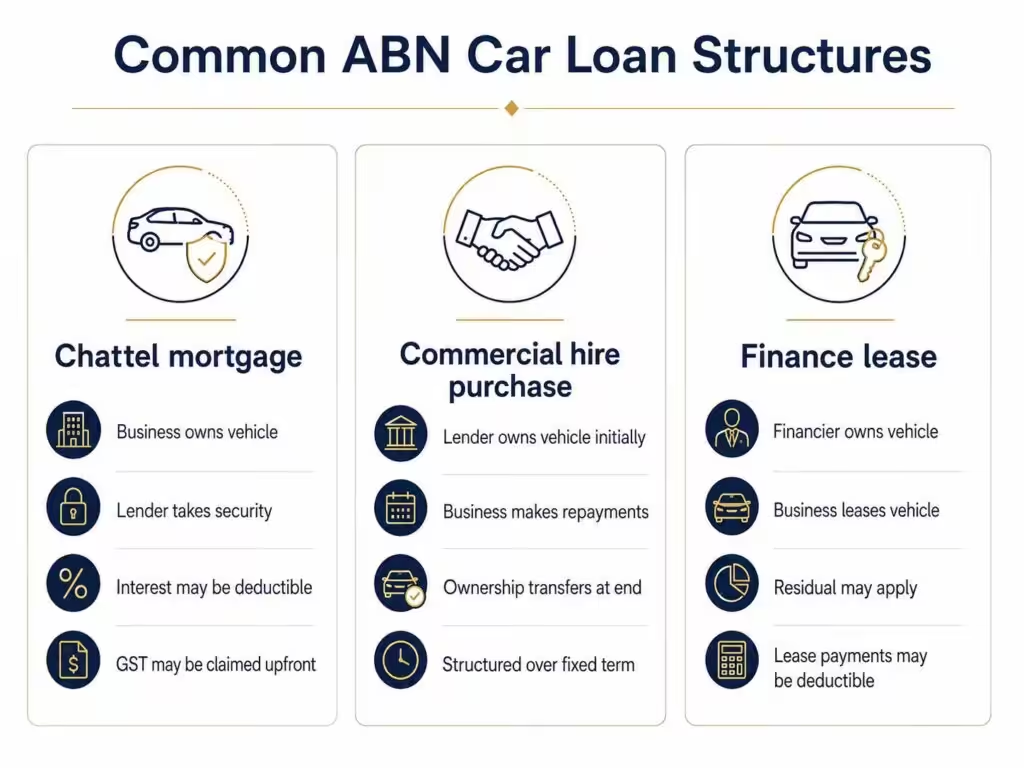
1. Chattel Mortgage
A chattel mortgage is arguably the most popular form of abn car finance. In this arrangement, you take ownership of the vehicle right from the start, and the lender takes out a “mortgage” over the car as security.
The chattel mortgage tax benefits are highly attractive to business owners. Because you own the asset from day one, you can typically claim the interest paid on the loan, the depreciation of the vehicle, and the Input Tax Credit (if you are registered for GST) on your next Business Activity Statement (BAS).
2. Commercial Hire Purchase vs Finance Lease
If a chattel mortgage isn’t right for you, you might find yourself weighing a commercial hire purchase vs finance lease.
- Commercial Hire Purchase (CHP): The lender buys the vehicle and hires it back to you over a set term. You don’t own the vehicle until the final payment is made.
- Finance Lease: The financier owns the vehicle, and you essentially rent it for the duration of the term. At the end of the lease, you have the option to pay a residual value to own it, refinance it, or trade it in.
A finance lease is often preferred by businesses wanting to keep the asset off their balance sheet, as the lease payments can typically be claimed as a direct tax deduction.
3. Novated Lease Versus Chattel Mortgage
Business owners often ask about the difference between a novated lease versus chattel mortgage. While a chattel mortgage is used by the business to buy a business vehicle, a novated lease is a three-way agreement between an employer, an employee, and a finance company. Novated leases are generally used as a salary packaging perk for employees to buy a vehicle for personal and business use, paid for out of their pre-tax salary. If you are a sole trader with no employees, a chattel mortgage is almost always the more appropriate business vehicle loan.
Meeting the Lending Criteria
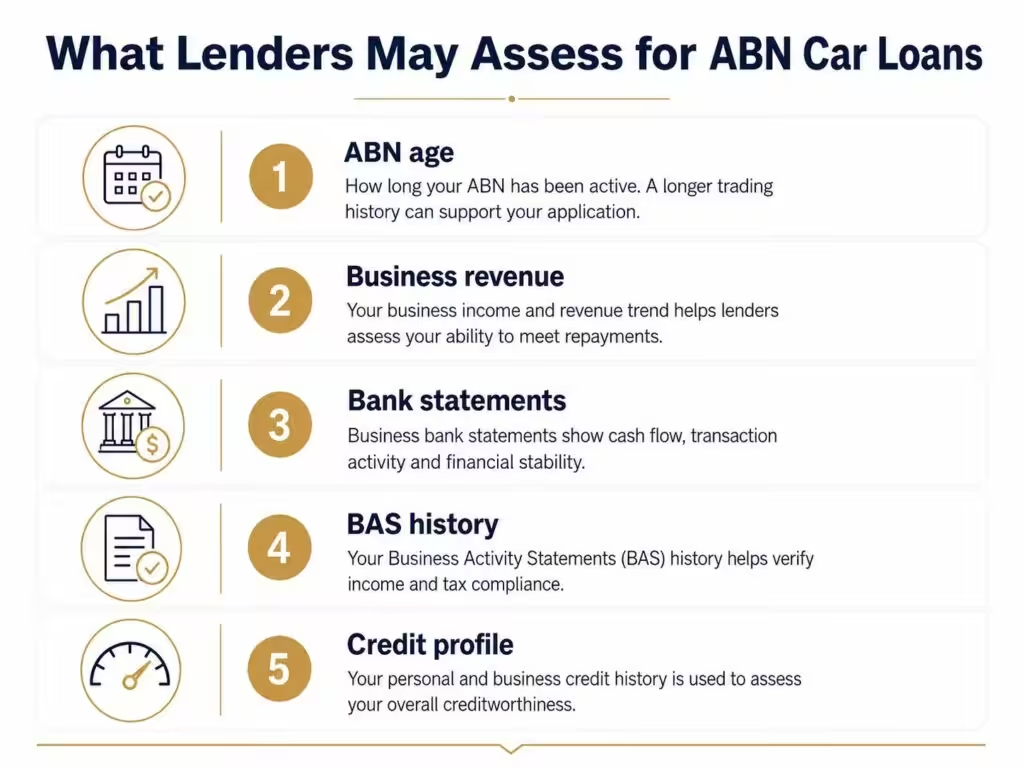
Commercial vehicle lending criteria are different from standard consumer loans. Lenders want to see stability and the ability to service the debt without putting your business under financial stress.
ABN Age and Startups
One of the most critical factors is the minimum period for active ABN registration. Traditional lenders and major banks generally require your ABN to be active for at least 12 to 24 months, backed by comprehensive financial statements.
But what about financing for new business owners? If your ABN is brand new, don’t panic. Some specialist commercial lenders offer startup finance, though you may face slightly higher interest rates or be asked to provide a larger upfront deposit to mitigate the lender’s risk.
Security and Guarantees
For proprietary limited (Pty Ltd) companies, lenders will almost certainly require a director guarantee for commercial finance. This means that if the business defaults on the loan, the director becomes personally liable for the outstanding debt. It provides lenders with the security they need to approve favourable interest rates.
Low Doc Loans and Credit Challenges
Gathering years of tax returns isn’t always feasible, especially if your business is growing rapidly or your accountant hasn’t finalised your recent end-of-year financials.
The Low Doc Car Loan Route
If you are wondering how to get a low doc car loan, the process is highly streamlined. Low documentation (low doc) loans allow self-employed individuals to secure vehicle finance without providing traditional proof of income.
Applying for finance without tax returns means the lender will instead look at alternative documents to verify your income. This usually includes:
- 6 to 12 months of primary business bank statements.
- Recent Business Activity Statements (BAS) lodged with the ATO.
- A declaration of income signed by you or your accountant.
Bad Credit Options
Having a less-than-perfect credit file can be incredibly stressful, but it doesn’t automatically disqualify you from getting a vehicle. There are specialist lenders who offer bad credit car finance for sole traders and small businesses. While you can expect a higher interest rate, making consistent, on-time payments on a bad credit loan can actually help rebuild your commercial credit profile over time.
Structuring the Loan to Suit Your Cash Flow
A major advantage of commercial finance is the ability to customise your loan structure.
Many business owners utilise balloon payment options for business vehicles. A balloon payment is a lump sum set aside at the end of the loan term. By pushing a percentage of the vehicle’s cost (often 20% to 30%) to the very end of the loan, your regular monthly repayments are significantly reduced. This preserves your day-to-day cash flow, allowing you to reinvest capital back into your business. At the end of the term, you can pay the balloon in cash, trade the car in to cover the cost, or refinance the residual amount.
Maximising Tax Benefits and Staying Compliant
Buying a car through your business is only half the battle; maximising your tax benefits legally is where the real value lies. Always consult your accountant before making a purchase, but keep the following concepts in mind.
Instant Asset Write-Offs
Historically, the government has stimulated small business growth through the instant asset write off for vehicles (and subsequent Temporary Full Expensing measures). Depending on the current federal budget rules at the time of your purchase, eligible businesses may be able to immediately deduct the full business portion of the vehicle’s cost in a single financial year, rather than depreciating it over several years.
GST Claims
If you are registered for GST, you will likely want to claim the GST back on your purchase. Here are the basic steps to claim gst on business car purchase:
- Ensure it’s a Taxable Sale: Buy from a licensed dealer or a GST-registered business so you receive a valid tax invoice.
- Calculate Business Use: You can only claim the GST proportional to your business use. (If the car is used 80% for business, you claim 80% of the GST).
- Claim on Your BAS: Report the GST credit on your Business Activity Statement for the period in which you purchased the car.
Limitations on Luxury Cars
Be aware of the depreciation limits on luxury vehicles. The ATO sets a “car limit” each financial year. If you purchase a passenger vehicle that exceeds this threshold (for example, a high-end European SUV), you can only claim depreciation and GST credits up to that specific limit, regardless of how much the car actually cost.
Personal Use of Business Vehicles
A very common question is: can I use a business car for personal use? The short answer is yes. However, you must meticulously track your usage. To claim vehicle expenses accurately, the ATO requires you to keep a logbook for 12 continuous weeks to establish your business-use percentage. Furthermore, providing a business car for personal use may trigger Fringe Benefits Tax (FBT) obligations, so it is vital to have your accountant structure your usage correctly.
Actionable Tips for Securing Your Loan
Ready to move forward with your commercial vehicle purchase? Follow these steps to ensure a smooth approval process:
- Keep Your Records Clean: Even if you plan on getting a low doc loan, having up-to-date bank statements and BAS lodgements will speed up the process.
- Check Your Credit Score: Know where you stand before applying. Fix any errors on your credit file to ensure you get the best possible interest rate.
- Determine Your Business Use: Accurately estimate your business versus personal use before talking to lenders, as this dictates the type of commercial loan you are eligible for.
- Use a Finance Broker: A commercial finance broker knows the exact lending criteria for dozens of banks and niche lenders. They can match your specific ABN age, credit profile, and vehicle type to the lender most likely to approve you.
Conclusion
Navigating the world of ABN car loans doesn’t have to be a headache. Whether you are aiming to leverage the immediate tax benefits of a chattel mortgage, looking to bypass heavy paperwork with a low doc option, or seeking flexible balloon payments to aid your cash flow, there is a commercial finance solution built for your specific needs.
By understanding the lending criteria, preparing your documentation, and keeping up to date with ATO guidelines on depreciation and GST, you can turn your next vehicle purchase into a powerful, tax-efficient asset for your business. Take the time to consult with a commercial finance expert and your accountant – and you’ll be on the road to business growth in no time.