
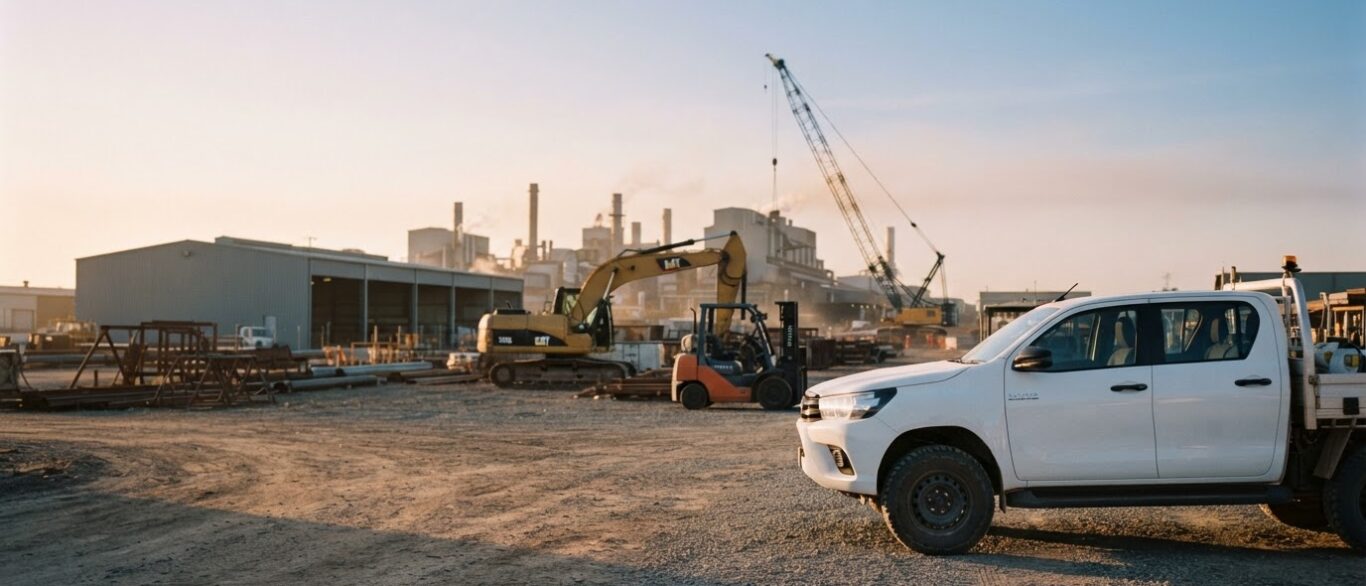
Whether you are buying a car, truck, earthmoving gear or specialist machinery for your business, the asset itself has a big impact on your finance options.
Lenders still look at your credit file, business numbers and cash flow, but they also look at the asset. That can change the loan amount, term, deposit, rate and even approval.
This matters in vehicle finance, business vehicle finance, truck finance, equipment finance and machinery finance.
What Are Primary, Secondary and Tertiary Assets?
In simple terms, lenders group assets by how easy they are to value, sell and use to recover funds if a loan defaults.
The easier the asset is to sell, the lower the risk.
Generally:
- Primary assets have broad demand and strong resale values.
- Secondary assets have a smaller buyer pool, but resale markets are still set.
- Tertiary assets are highly specialised and often have limited resale markets or a faster value drop.
Different lenders may use these groups a little differently, but the logic is the same across the asset finance industry.
What Are Primary Assets?
Primary assets have broad market demand, clear price data and a strong resale market. If the lender needs to sell them, they are usually easy to move on.
Because they are easier to recover against, they often attract the best finance terms.
Common Examples of Primary Assets
The most common primary assets include:
- Passenger motor vehicles
- SUVs
- Utes
- Vans
- Light commercial vehicles
- Popular motorcycles
- Standard caravans
- Common trailers
For business borrowers, primary assets often include:
- Delivery vans
- Fleet vehicles
- Sales vehicles
- Company cars
- Small commercial vehicles from well-known brands
These assets usually have:
- Strong second-hand markets
- Reliable value data
- Broad buyer demand
- A slower value drop
- Easy access to replacement parts
Finance Options for Primary Assets
Because lender risk is low, finance for primary assets is often the most flexible.
Depending on the borrower and lender, this can include:
- Higher loan-to-value ratios (LVRs)
- Low or no deposit options
- Longer loan terms
- Lower interest rates
- Faster approvals
- Less paperwork
- More lender choice
For many borrowers, primary assets are the easiest part of business vehicle finance.
What Are Secondary Assets?
Secondary assets sit between common consumer assets and highly specialised commercial gear.
They usually have set resale markets, but the buyer pool is much smaller.
That is why truck finance, excavator finance, earthmoving finance and finance for heavy equipment often need a closer look.
Lenders can still finance these assets, but they often ask for more detail.
Common Examples of Secondary Assets
Examples include:
- Trucks
- Prime movers
- Excavators
- Bobcats
- Skid steer loaders
- Forklifts
- Telehandlers
- Agricultural equipment
- Tractors
- Harvesters
- Ride-on mowers
- Small earthmoving equipment
- Access equipment
- Commercial printing equipment
- Manufacturing machinery
- Workshop equipment
Many of these assets are used by industries such as:
- Construction
- Transport
- Civil works
- Agriculture
- Landscaping
- Manufacturing
- Warehousing
- Logistics
Unlike passenger vehicles, these assets often appeal to more niche buyers.
If a lender had to repossess and sell the gear, it may take longer to find the right buyer.
Finance Options for Secondary Assets
Finance is still widely available, but lender policy becomes more important.
Depending on the asset and borrower, lenders may assess:
- Asset age
- Engine hours
- Kilometres
- Operating condition
- Manufacturer reputation
- Industry demand
- Residual value
- Whether the equipment is new or used
Finance structures may include:
- Chattel mortgages
- Commercial hire purchase
- Finance leases
- Equipment loans
- Asset-backed business loans
Some lenders may cut loan terms on older gear or ask for larger deposits when resale values are less certain.
The lender you choose matters more here because different lenders focus on different sectors.
For example, one lender may be strong in heavy transport, while another may prefer agricultural equipment finance.
That is where lender asset policy can make a big difference.
What Are Tertiary Assets?
Tertiary assets are the most specialised group.
They often have limited resale markets, unique operating uses or very specific buyers.
Because they can be harder to value and harder to sell if repossessed, they usually carry higher lending risk.
Common Examples of Tertiary Assets
Examples include:
- Mining equipment
- Quarry equipment
- Drilling rigs
- Cranes
- Asphalt plants
- Concrete batching plants
- Large industrial machinery
- Medical imaging equipment
- Dental fit-out equipment
- Food processing plants
- Recycling equipment
- Airport ground equipment
- Aircraft
- Marine vessels
- Commercial boats
- Specialist manufacturing lines
- Custom-built machinery
Other tertiary assets may include:
- Mobile medical clinics
- Waste management equipment
- Recycling plants
- Commercial laundry systems
- High-value laboratory equipment
- Specialised engineering machinery
Many of these assets are bought by businesses with very specific operations.
The market for second-hand buyers can be very small, which makes recovery much harder for the lender.
Finance Options for Tertiary Assets
Financing tertiary assets often takes a lender with real commercial experience.
Assessment usually goes beyond the borrower’s finances.
Lenders may also review:
- Industry outlook
- Business experience
- Cash flow forecasts
- Equipment use
- Existing contracts
- Asset purpose
- Manufacturer support
- Resale market depth
- Import status
- Maintenance history
Finance may involve:
- Larger deposits
- Shorter loan terms
- Specialist commercial lenders
- Extra security
- Director guarantees
- Business financial statements
- Independent asset valuations
Interest rates can also vary more because risk is less predictable.
Many mainstream lenders simply will not finance some tertiary assets, while specialist commercial lenders and machinery finance teams will.
Why Asset Type Matters
Two borrowers with the same financial profile can get very different results simply because they are buying different assets.
For example:
A business buying a new Toyota HiLux may receive:
- 100% finance
- A seven-year loan term
- Fast automated approval
- A very competitive rate
Another business buying a specialist drilling rig worth the same amount may face:
- Larger deposit requirements
- More financial documents
- An independent valuation
- A commercial credit review
- A shorter loan term
The difference is not only the borrower.
It is the lender’s ability to get its money back if something goes wrong.
Asset Age Also Plays a Major Role
Even within the same asset type, age can have a big effect on lender policy.
Many lenders set a maximum age at the end of the loan term.
For example:
- Passenger vehicles may need to be under 15 years old when the loan ends.
- Trucks may have different limits from lender to lender.
- Earthmoving gear is often judged by engine hours rather than age alone.
- Agricultural machinery may be assessed against maker support and resale demand.
Older assets do not automatically rule out finance.
But the lender pool gets smaller, so lender choice matters more.
Different Lenders Have Different Risk Appetites
One of the biggest mistakes in equipment finance is assuming every lender sees assets the same way.
In reality, every lender has its own credit policy.
Some lenders actively target:
- Transport businesses
- Earthmoving contractors
- Medical professionals
- Farmers
- Manufacturing businesses
Others may avoid those sectors altogether.
Likewise, one lender may happily finance older excavators while another will only consider new gear.
This is one reason why an experienced broker can add real value.
Instead of approaching one lender and taking a decline, a broker can match the deal to lenders that fit the asset type and the industry.
Common Finance Structures Across Asset Types
The finance product itself can also change based on the asset and the borrower.
Common options include:
- Chattel Mortgage
- Equipment Finance
- Commercial Equipment Finance
- Asset Finance
- Commercial Hire Purchase
- Finance Lease
- Operating Lease
- Low Doc Asset Finance
- Business Equipment Loan
The best structure depends on:
- Business structure
- GST treatment
- Cash flow
- Tax points
- Asset type
- Industry
- Intended use
Some borrowers prefer asset-backed lending, while others need a different structure for GST or tax reasons.
Getting advice from both your finance broker and accountant can help make sure the structure fits your wider business plan.
How to Improve Your Approval Chances
No matter whether you are financing primary, secondary or tertiary assets, these steps can help:
- Choose an asset with strong resale value where practical.
- Keep clear business records.
- Show stable cash flow.
- Explain how the asset will generate income.
- Consider a deposit if you are buying specialised gear.
- Work with a broker who understands commercial asset finance, business asset finance and lender asset policy.
Well-prepared applications are often viewed more favourably, especially for specialised commercial assets.
The Bottom Line
Understanding the difference between primary assets, secondary assets and tertiary assets makes it much easier to see why finance outcomes can vary so much between purchases.
Primary assets, such as cars, SUVs, utes and light commercial vehicles, usually attract the widest range of lenders, the best rates and the most flexible loan structures.
Secondary assets, including trucks, excavators, forklifts, tractors and construction equipment, are still well supported by lenders, but policy is more specific and lender selection matters more.
Tertiary assets, such as mining equipment, aircraft, marine vessels, medical equipment and specialist industrial machinery, often need specialist commercial lenders who understand both the industry and the gear being financed.
Because every lender has a different credit policy and risk appetite, choosing the right lender can matter just as much as choosing the right asset. A good broker can help you find lenders whose policies fit your asset, industry and financial position, which can improve your chances of a strong approval and a finance structure that supports your long-term goals.
Q&A
Question: How do lenders decide whether an asset is primary, secondary or tertiary?
Short answer: They look at how easy it is to value the asset, sell it and recover funds if the loan defaults.
Primary assets have broad demand and steady resale values, so they are low risk.
Secondary assets have a smaller buyer pool, but they still have real resale markets.
Tertiary assets are highly specialised and often have limited resale markets or a faster value drop.
Different lenders may read these groups a little differently, but the risk logic is the same.
Question: How does the asset type change my finance terms and pricing?
Short answer: Lower-risk primary assets usually qualify for higher LVRs, low or no deposit, longer terms, lower rates, faster approvals and more lender choice.
Secondary assets are still financeable, but lenders may look more closely at age, hours, condition and resale value. They may also ask for a larger deposit or a shorter term.
Tertiary assets often need specialist lenders, more paperwork, extra security or a larger deposit, and rates can move more with the level of risk.
Question: What extra checks do lenders make on secondary and tertiary assets?
Short answer: For secondary assets, lenders often check age, engine hours or kilometres, condition, maker reputation, industry demand, residual value and whether the gear is new or used.
For tertiary assets, the check goes wider. Lenders may look at industry outlook, the borrower’s experience, cash flow forecasts, equipment use, existing contracts, asset purpose, maker support, resale market depth, import status and maintenance history.
Some deals also need an independent valuation or a director guarantee.
Question: Does the age or use of the asset matter to lenders?
Short answer: Yes. Many lenders set maximum age limits at loan end, and the limit may change by asset type.
Passenger vehicles are often expected to be under 15 years old at the end of the term. Trucks may have lender-specific limits. Earthmoving gear is often judged by engine hours. Agricultural machinery may be reviewed against maker support and resale demand.
Older or heavily used assets do not always rule out finance, but the lender pool gets smaller and the term may be shorter.
Question: Why work with a finance broker, and how can I improve approval odds?
Short answer: Lenders have different risk appetites by asset type and industry, so a broker can match your deal to lenders that prefer your asset and sector. That can improve approval odds, speed and pricing.
You can help your case by choosing assets with strong resale value where practical, keeping accurate financials, showing stable cash flow, explaining how the asset will make money, considering a deposit for specialist gear and working with a broker who understands commercial asset finance.